WHITE PAPER
Non-Revenue Water: How Utilities Are Solving a $6.8B Problem
Metron helps providers find missing water and stabilize their finances.
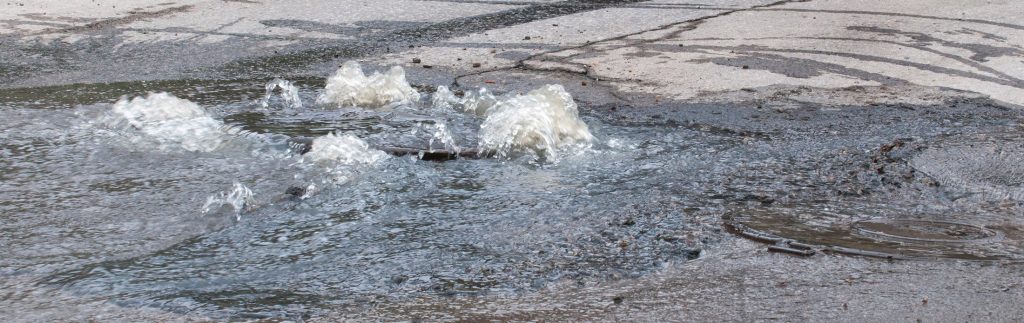
That’s the total revenues lost each year due to non-revenue water (NRW) — the water that flows into the utility’s pipes, but is never paid for by customers. Most is lost to leaks: one-third of America’s 2.3 million miles of water pipes are over 50 years old, and every two minutes, a water main breaks somewhere in the United States. A smaller amount—about 13%—is lost to billing errors, slow meters, unauthorized use, and other problems that mean end-users aren’t charged for the water they use.
Put it together, and 2.7 trillion gallons of water goes unbilled every year, costing utilities, and the communities they serve, billions of dollars in lost revenues.
A critical challenge
The NRW crisis getting worse: between 2017-2021, the number of utilities losing 30% or more of their water more than doubled. But it doesn’t have to be this way. According to the EPA, three-quarters of NRW is easily recoverable if providers know where to look.
That’s where Metron comes in. Our cellular smart meters help utilities pinpoint leaks, accurately bill customers, and rapidly implement revenue-positive solutions, delivering immediate ROI for budget-conscious water providers.
5 ways utilities can reduce NRW losses
Replacing legacy equipment with Metron’s cellular smart meters helps reduce NRW in the following ways:
1. Quickly & Easily Detect Zero-Use Meters. Non-functioning meters are automatically flagged in real time, with no need to pore over data or wait for monthly or quarterly reads. That lets utilities bill accurately even in challenging environments. Pioneer Water of Casper, WY, cut its water losses by over 50% after installing Metron devices to replace older meters that froze up during cold snaps and recorded zero-flow for weeks or months on end.
2. Hassle-free data collection. Metron’s meters provide robust AMI via commercial cellular networks, with no need for drive-by or manual reads, and no costly and unreliable RF transmission networks. With reliable coverage across their service areas, utilities never have to estimate bills: every drop of water is recorded in real time, with data flowing directly into utilities’ billing tools to ensure users are charged accurately and on schedule.
3. Prevent unauthorized use. Upgrading legacy equipment provides an important opportunity to audit accounts, and with cellular connectivity, any future water theft or meter tampering is immediately visible, ensuring unauthorized use is quickly identified and addressed. One city boosted enforcement by 60X after switching to Metron, generating $295,000 in new annual water revenues and slashing systemwide NRW losses by over 85%.
4. Detect low flow rates. Legacy meters run slow over time, with reads not reflecting actual consumption. Metron’s Spectrum PD and Spectrum Wave meters, by contrast, remain accurate even at very low flow rates, allowing many utilities to reduce NRW by 6-8% simply by capturing more accurate (low flow) flow data. For Abra Water of Arizona, better source and customer-side flow data delivered over 50% in NRW savings: “As soon as we got Metron meters installed, our water losses went way down,” explains ops manager Rod Yarbro.
5. Instantly identify major leaks. Metron’s zone metering, District Metering Analytics (DMA), and intelligent water analytics deliver a clear picture of water use across the entire network, with rapid anomaly identification to pinpoint potential leaks and enable smarter resource allocation to upgrade aging pipelines. Lost water can also be traced back to consumer-side leaks: after switching to Metron, for instance, Corinthian Bay Mutual Water Company of California identified many homes where leaks totaled up to 90% of typical consumption.
Take control of your revenues
For utilities, NRW impacts not just current revenues but also access to capital. In fact, S&P Global Ratings now considers water losses when rating utilities’ creditworthiness, treating NRW as a proxy for operational health and effective management.
This makes NRW a key strategic priority for utilities—and while two-thirds of utilities have water-loss control programs in place, just 45% say they’re prepared to meet their long-term water needs. To turn that around, utilities need to upgrade not just leaking infrastructure, but also the metering and analytics they rely on to track consumption, bill customers, and manage their operations.
That’s the challenge that Metron’s smart meters were designed to overcome. With decades of industry experience serving everyone from small providers to major metro areas, we’re committed to helping water providers make non-revenue water a thing of the past.
Get in touch to day—and find out how Metron can help you take control of your revenues.