Irrigation and Metron Metering
Irrigation is a significant component of water use, both for domestic yards and larger properties. Metron can add significant value to water management as it applies to irrigation in three ways:
- WaterScope® automatically identifies irrigation activity.
- WaterScope can be configured to identify watering schedule violations.
- Submetering allows deeper oversight of irrigation costs for real estate customers.
We’ll look at these scenarios below.
WaterScope Identifies Irrigation Activity
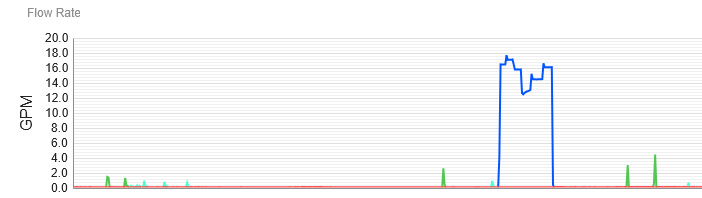
Metron’s water usage analysis software takes advantage of the minute-by-minute consumption data to automatically identify irrigation cycles. Domestic irrigation, which often consists of multiple zones, typically looks like this in WaterScope Pro:
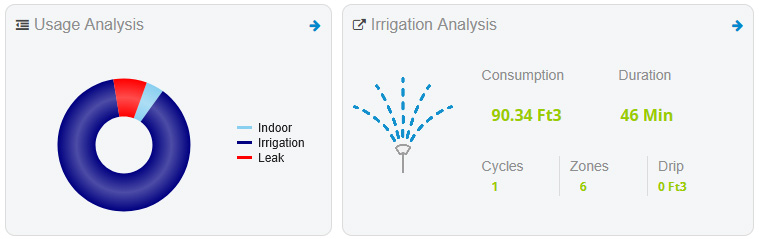
WaterScope Pro takes things a step further, and provides an analysis of irrigation as a component of total usage:
The newer WaterScope PLUS products (WaterScope MHP, WaterScope Property, etc.) also identify irrigation activity as “outside” water usage:
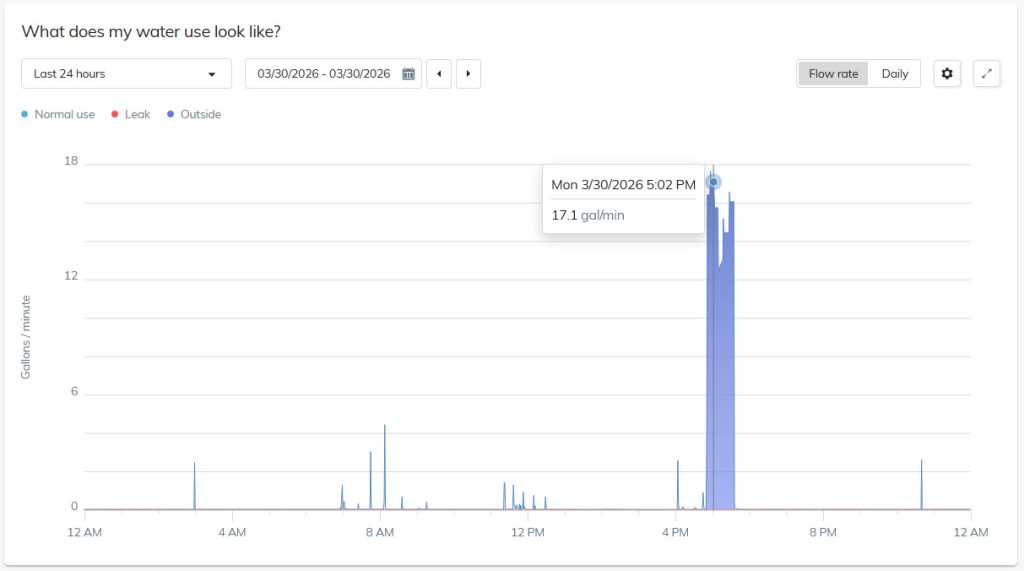
With this much detail, it’s easy for utilities and individual consumers to understand how much water is going into irrigation, allowing informed choices regarding conservation and cost-savings.
Watering Schedule Violations
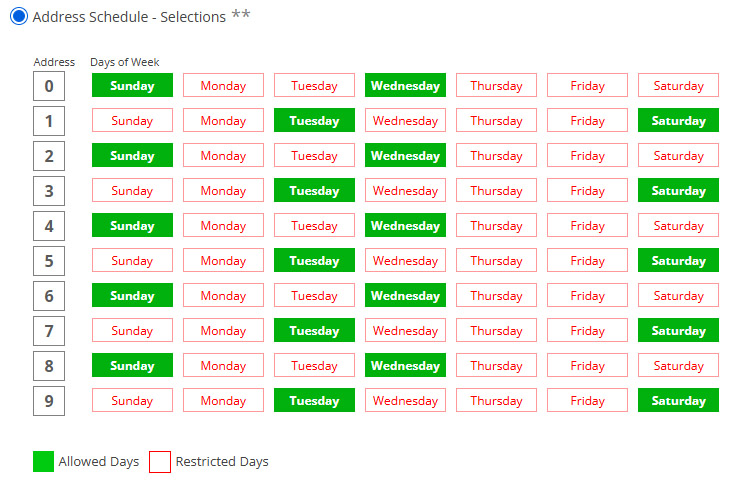
Utilities can configure WaterScope Pro to be aligned with any watering restrictions that are in force. These are typically based on street address – usually odd/even, though WaterScope Pro allows finer control. In the settings page, watering restrictions might look like this, which is an odd/even schedule:
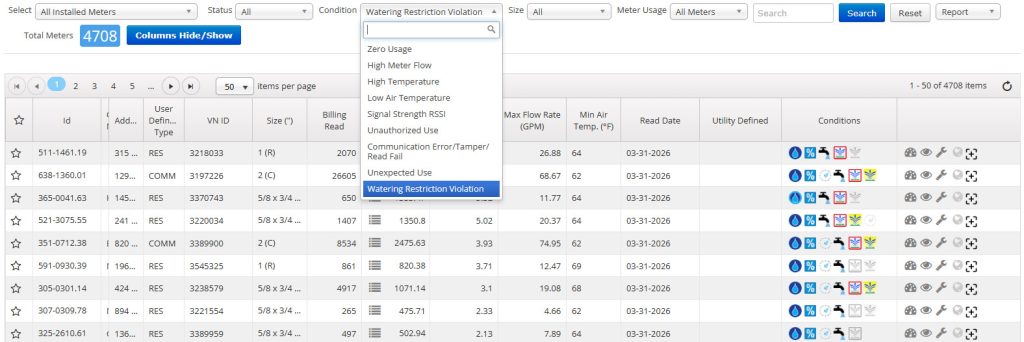
With these restrictions enabled, a utility manager can pull up a list of violators by selecting “Watering Restriction Violation” from the “Condition” pull-down menu:
It’s also possible to flag users who irrigate during the heat of the day:

Submetering for Irrigation
If irrigation is a significant component of water usage for a property (such as a golf-course, apartment complex, school campus, ranch or farm), then it can be helpful to install a meter on the line or lines leading to the irrigation system. This allows the property owner or manager to accurately track how much water is used for irrigation, which is useful for accounting, leak detection and cost-control.
It can also lead to sewage fees rebates from the utility, since water used for irrigation is not returned to sewer.
A Metron cellular meter used in this context isn’t tracked by the water utility; instead, its consumption data is made available through WaterScope directly to the owner and/or manager of the property.
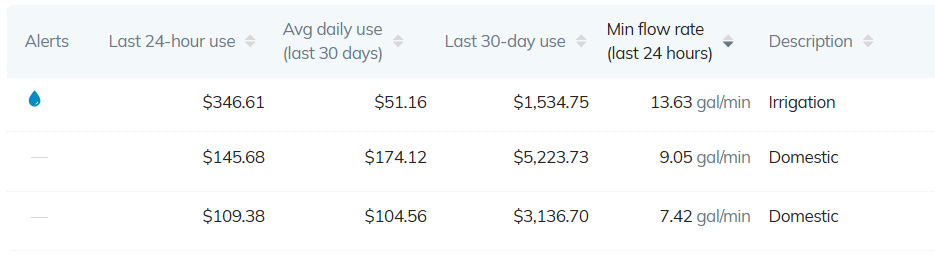
Here is an example in WaterScope Property of a multi-family property that has a meter assigned to the irrigation system: